Webuild Library
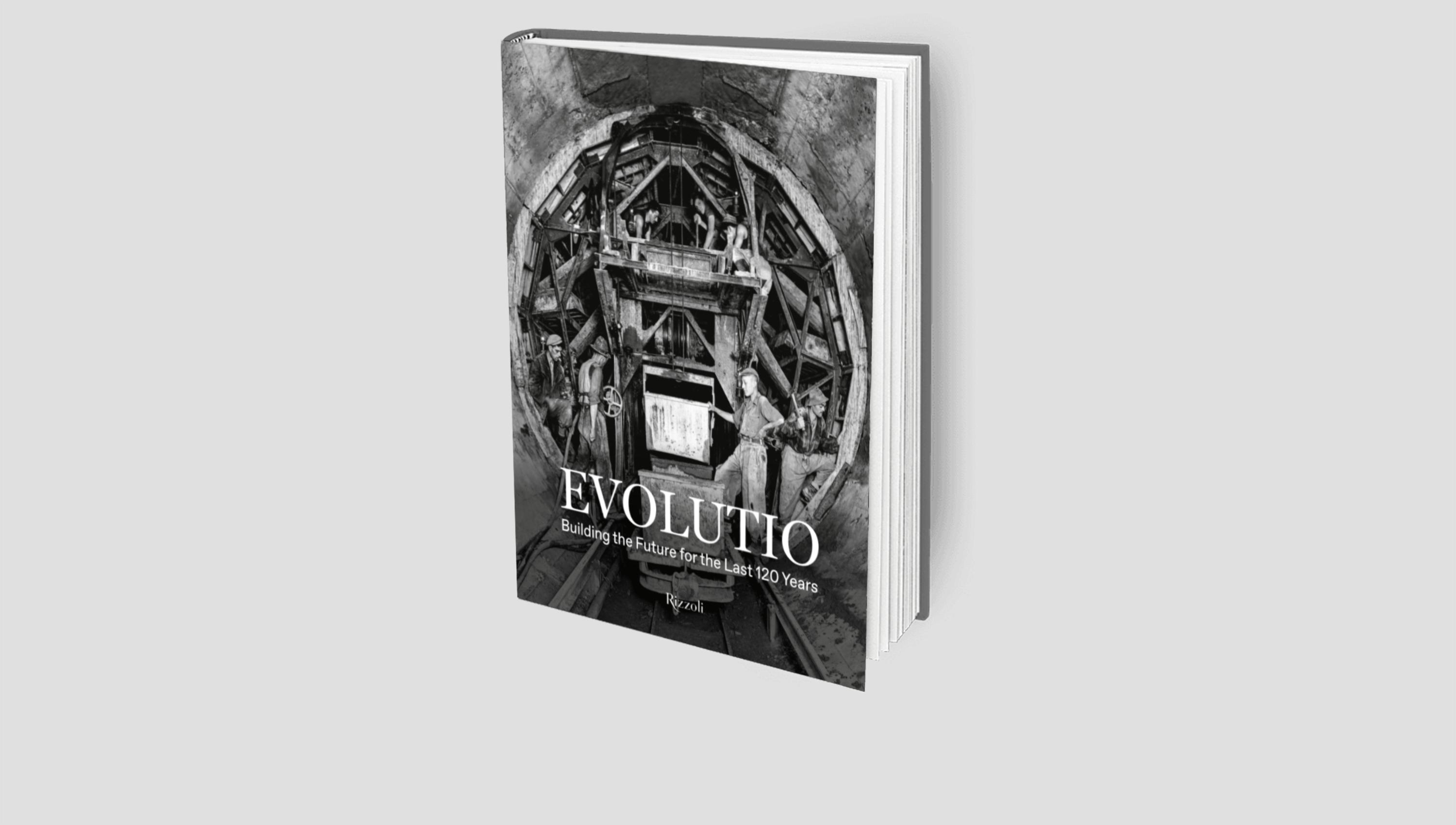
EVOLUTIO: Building the future for the last 120 years
There is an invisible bridge that has allowed society to cross the centuries, transforming isolated communities into modern countries, remote rural areas into industrial cities, elementary needs into opportunities for progress. That invisible bridge is known as infrastructure. If we look back, we see how every phase in human development has been triggered by an infrastructure: a road, a bridge, an aqueduct, a railroad, a dam.
Twentieth-century Italy is a living example of this. In just a few decades our country has gone from being an agricultural economy to an industrial society, and this epic leap was made possible thanks to the courage and vision of those who imagined and built hydroelectric power plants in Alpine valleys, dams to supply cities and factories with energy, highways to connect distant territories, railroads and subways that have changed the pace of everyday life. Public works are the great silent engine that has ferried entire generations toward a better future, accelerating in recent years despite all the unpredictable exogenous factors.
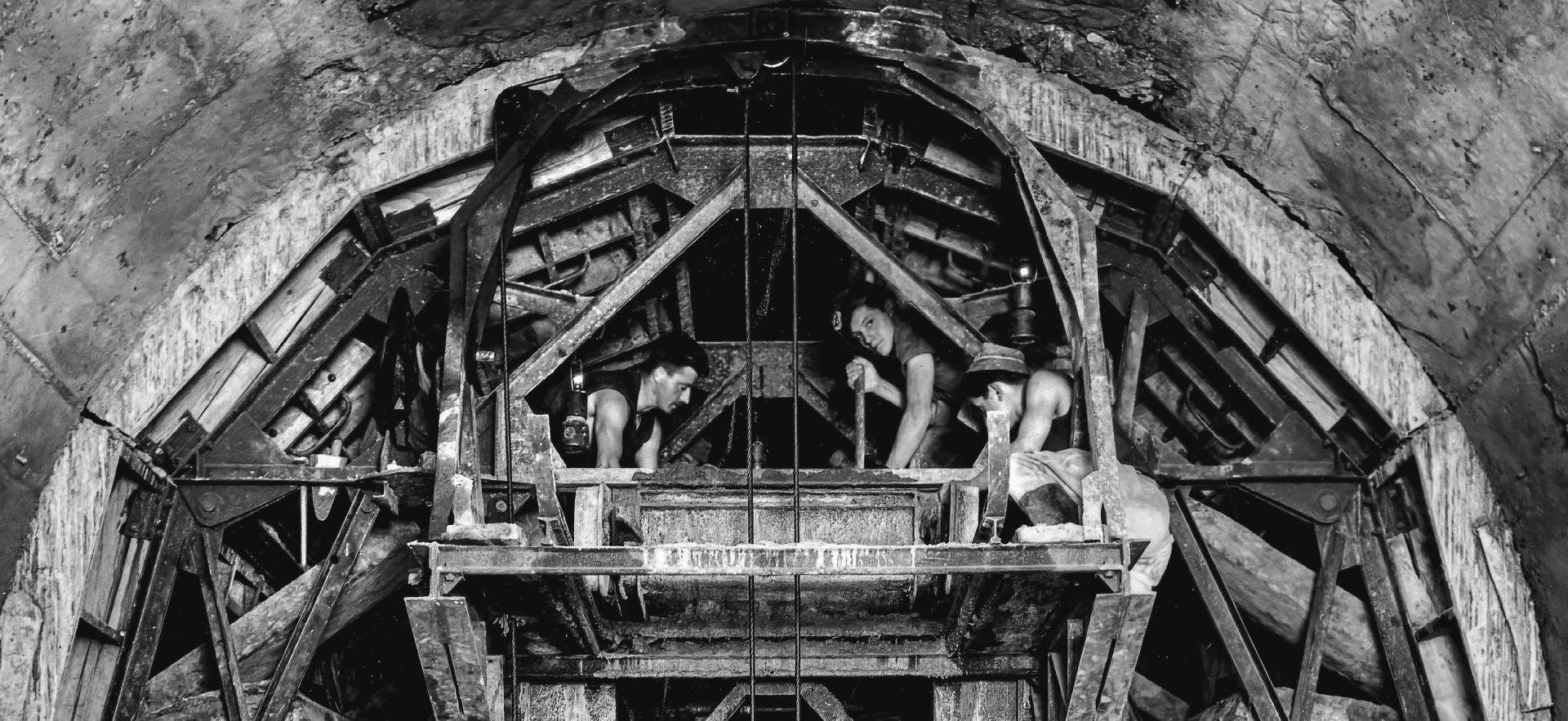
Behind these works are the stories of men and women, communities and territories. A dam is not only concrete and steel, it is also the redemption of an entire valley, the light that brightens houses, the water that irrigates the fields. A High-Speed train is not just a track that shortens distances; rather, it is a new era opening up for millions of people, the chance to work, study, meet in ways previously unthinkable. A subway does not just mean mobility: it is everyday life that flows faster. It is the city that breathes better.
The Webuild Group, which currently harnesses the legacy of some of the biggest Italian companies in the sector, with 120 years of history and over 700 infrastructural works built in 110 countries, has contributed directly to carving out this path. The works that the company has built have changed the territory and the collective imaginary at the same time: from rescuing the Abu Simbel Temples in Egypt—a unique example of how technology can become a way to safeguard a thousand-year-old culture—to the great African dams that now supply energy and water to entire countries, thus implementing their development; from the Autostrada del Sole—the A1 Highway that connects Northern and Southern Italy—to the Rome–Florence Direttissima—the first High-Speed Railway in Europe—to the more recent symbols such as the New Panama Canal, which has made it possible for the largest ships in the world to cross the isthmus rather than having to circumnavigate the American continent; the Stavros Niarchos Cultural Center in Athens, both an engineering work and a cultural citadel; the Al Bayt Stadium in Qatar, which transformed a global sports event into a tale of identity and tradition; and, lastly, the Metro Art subway stations in Naples, which each and every day remind thousands of travelers that beauty can also inhabit the spaces of mobility.
These works are key elements that have marked a before and an after, and show how our identity as builders is intertwined with the life of people and with the destiny of places, in a choral approach that encompasses the force of collective work and the idea that building is never an end in itself; it is instead a catalyst that generates value for the community. Breathing life into EVOLUTIO means adopting this choral approach with a project that is not only an Exhibition or a Digital Museum, but also an open, shared story, a reflection on how infrastructure has accompanied progress in Italy and in the world. EVOLUTIO stimulates thinking on the part of all of us: it reminds us of where we came from, so we can understand where we are headed. It restores the memory of a century of change, showing how roads, dams, railroads, ports, and airports have transformed the lives of people, and how they will continue to do so in the future. Today we need to ask ourselves about our day and age by looking at the challenges of the past as a lesson for the present and for the future. If yesterday it meant bringing electricity to places where it did not exist, building roads and bridges to connect cities and territories, guaranteeing work and basic infrastructure, today the task is even more complex due to the speed that change imposes on us. For 120 years we have fulfilled people’s needs. Today we are entering a new phase in which we must provide new answers.
What will tomorrow’s needs be? What will society’s trajectory be? What are the necessary conditions (economic, political, social) that will allow us to fulfill these needs? How will it be possible to continue to join efficiency and freedom, economic prosperity and social development? What kind of world do we want for our children? We live in an era of ecological transition, sustainability, digital transformation. Public works must be increasingly resilient, sustainable, intelligent. Not only must they answer to the new needs; they must also anticipate them: reduce emissions, adapt to climate change, guarantee water security, connect not just physical spaces but networks of knowledge and data as well. Public works are once again being asked to be trawlers, tools that help society navigate in a world that is changing at great speed, to deal with global crises and to make it easier to find solutions, and to generate growth. Their story is the story of our country, its capacity to reinvent itself and to determine its future.
To be able to pursue a long-term development trajectory that has at its core the country’s competitiveness and infrastructural growth, a series of prerequisites are needed. We need to bolster the synergy between the certainty of rights and the competition between businesses, simplifying the legal framework to make it more coherent with the dynamics of the international markets. The rules and regulations must become an engine for competitiveness for a new strategic plan for infrastructural growth, eliminating factors that obstruct its development and rewarding virtuous companies. It is necessary to continue to aim for the formation and creation of quality work, as laid down by our Constitution, and infrastructure can do so during both the construction phase and the management and maintenance phase.
A coherent Country-System is needed that will look to this sector as a strategic partner for development and growth. Italy must make bold choices to attract investments that will integrate economic development, welfare, and infrastructural growth, in response to the challenges of a rapidly changing global context. The choices we make today are the legacy and inheritance for our children. Precisely like the fathers and mothers before us who experienced the horror of world wars, but discovered in reconstruction a glimmer of hope, rebirth and, at the same time, an opportunity to test a different future. Driven by that spirit we look to tomorrow, proud of what we have done, yet with all the humility needed to face the scale and complexity of what is yet to be done.

EVOLUTIO: Building the future for the last 120 years
EVOLUTIO: Building the future for the last 120 years