Innovative and Smart Builders
Our Commitment to Innovation and, Research, and Development
Innovation and Competitiveness for Sustainable Growth
Innovation is one of the strategic pillars of Webuild for the Group's sustainable growth. We invest in innovation, research, and development at both project and corporate levels, with a focus on creating a sustainable legacy. This approach addresses the environmental, engineering, and technical challenges we face, as well as the safety of our people and the well-being of local communities where we operate.
Every Webuild site serves as a laboratory of ongoing, advanced research in processes, products, and materials, contributing to technological advancements within our industry and enhancing the Group’s competitiveness by focusing on:
- Streamlining core and staff processes for improved performance efficiencies (time and cost optimization);
- Energy and socio-environmental performance of our projects, aimed at generating positive impacts, such as fewer work-related incidents, environmental protection, and the growth and development of communities and regions we work with;
- Quality in construction performance, translating to the satisfaction of our clients.
- Reduction of construction lead times;
- Ability to pre-empt and respond to future challenges, adapting to a continuously-changing market;
- Expansion into new business sectors.
Investing in innovation also means investing in the digitalisation, automation and industrialisation of processes involving all areas of the company.
In 2025, investments in innovation and cleantech – innovative technologies designed to reduce environmental impact – amounted to over €333 million (of which €12 million was allocated to innovation, research and development projects, involving over 190 people), with a total investment of €586 million over the 2024-2025 period, surpassing the initial target of €430 million, an increasingly concrete contribution to the development of innovative solutions in the sector.
Our Innovation Areas
Innovative Solutions for Unique Projects: How Innovation Drives the Sustainability of Our Works
In the five-year period 2019-2023, we invested an average of approximately €33 million per year in innovation activities. In the three-year period 2021-2023, the Company invested additional resources of over €57 million to launch innovative projects with a high technological and digital impact on business processes
We are committed every day to research and development programmes to successfully address the technical challenges of our projects, right from the tender stage.
Construction Techniques
We apply Lean Construction principles to re-engineer our processes with the aim of improving performance quality. In recent years, the Group has focused on developing "best-in-class" innovative processes and products, from tunneling to specialized structures. In addition to helping improve TBM (Tunnel Boring Machines) excavation techniques worldwide with TBMs capable of operating at high pressure, on steep slopes and in highly connected environments, Webuild continues to innovate in the tunnelling sector by developing, for example, innovative methods such as the Riser Concept applied in the Matanza-Riachuelo river basin in Argentina.
In 2024, on the Naples-Bari high-speed railway, we began Italy's first hyperbaric tunneling operation, a European best practice. For part of the Casalnuovo tunnel, on the Naples-Cancello section, excavation is carried out using compressed air to keep groundwater out of the work areas.
Segment factory - Roboplant
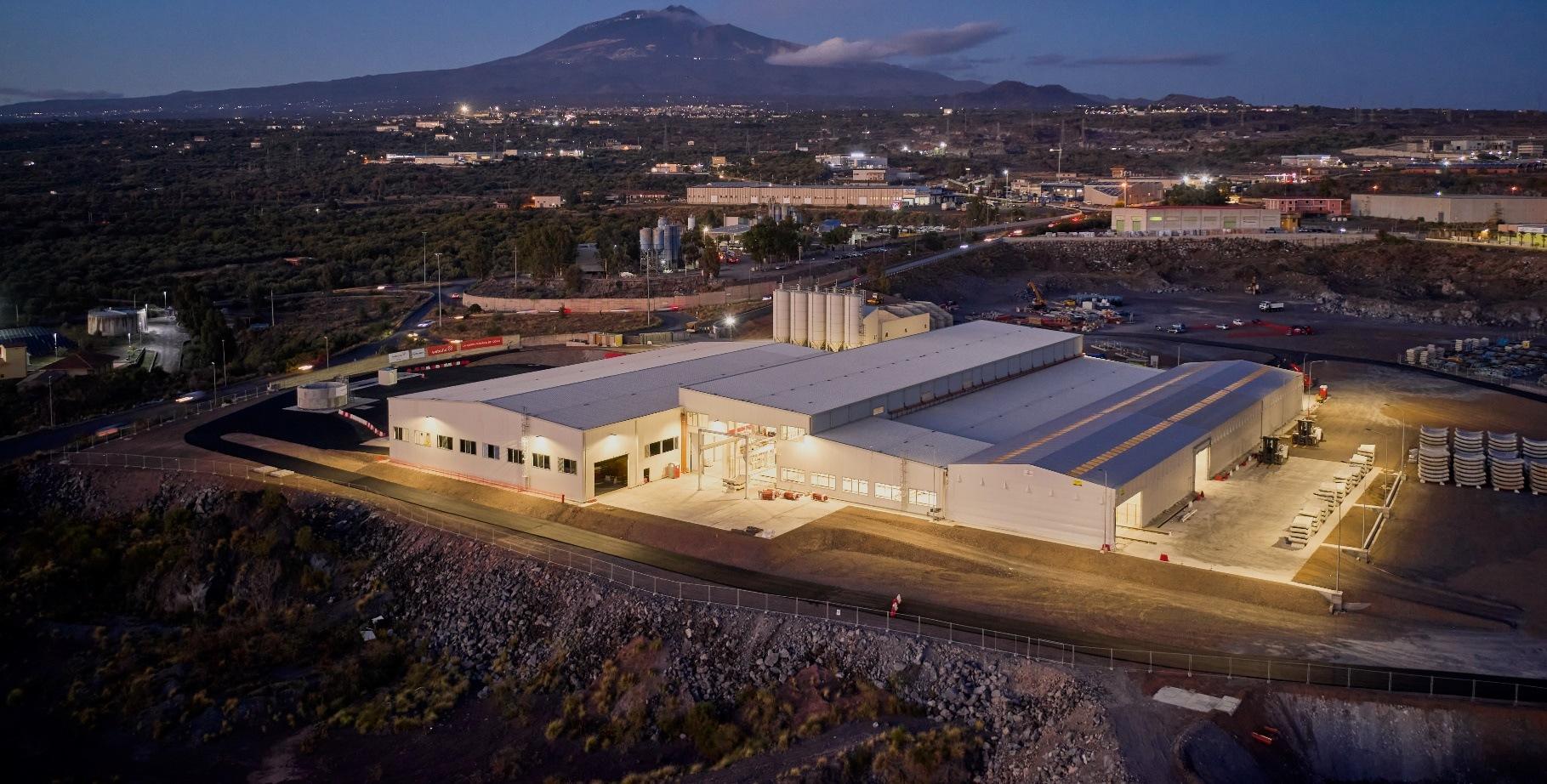
The segment factory was set up for the sustainable automated production of pre-cast segments for tunnel lining, which are essential to build mechanised bored tunnels. The factory uses robotised technologies and highly efficient automation techniques with a strong focus on innovation, efficiency, circular economy, safety, quality and sustainability. The Group’s intention is to reduce the environmental footprint of its production activities by developing a product that is more resilient and better performing.
The factory has also been designed in such a way that it can be dismantled and re-used in other areas in line with the design for deconstruction concept. It is almost autonomous and meets most of its water and energy requirements using environmentally-friendly solutions such as solar energy and the harvesting of rain water.
In 2023, we inaugurated Roboplant in Sicily, the first safe, green, and fully automated Factory 4.0 facility, designed and developed by Webuild for the production of tunnel lining segments.
These factories are in Sicily and Puglia and will provide the work sites with tunnel segments for the high-speed Naples - Bari and Palermo - Catania - Messina railway lines, supporting the value chain for the construction of mechanised bored tunnels. Overall, the four factories will help to create roughly 450 jobs, mostly local, between the positions already filled and to be filled, thus consolidating Webuild’s commitment to modernising the infrastructure of southern Italy.
Green TBMs
For several years, the Webuild Group has been collaborating on the design and development of advanced Tunnel Boring Machines (TBMs), designed to reduce energy and water consumption by optimising the systems and devices on board the TBMs.
Additional green TBMs were readied for use and delivered in 2025 to the RFI Italia railway work sites, while the operating data of those already commissioned were monitored.
These machines are designed to reduce their environmental footprint, improving the overall efficiency of the system with a reduction in energy and water consumption of approximately 20% per cubic metre of tunnel excavated compared to traditional TBMs.
The Innovative FACS System
The Force-Activated Coupling System (FACS) is an advanced segment assembly model designed to enhance the structural safety of hydraulic tunnels. This highly innovative technique, developed and patented by Webuild, is being applied in Australia’s Snowy 2.0 project.
How we innovate - Video intervista a Nicola Valiante, Webuild Engineering - Director Design Services
The W.E.M. Project
Rooted in principles of circular economy and technological innovation, the WEM (Webuild Equipment & Machinery) project was launched by Webuild in 2024 with the establishment of the first TBM regeneration facility in Terni, Italy.
Under a traditional lifecycle, TBMs (Tunnel Boring Machines) excavate and construct tunnels, after which they are dismantled and returned to the supplier. At the Terni facility, Webuild has introduced a process for regenerating used TBMs, making it the first general contractor to invest in breathing new life into these machines. This circular economy model enhances project efficiency while reducing waste.
In 2025, Mireille—Webuild’s first refurbished TBM—launched excavation of the Caterina Tunnel on the Salerno–Reggio Calabria High-Speed/High-Capacity line. The excavation was completed in April 2026.
Webuild Equipment & Machinery - The first TBM fully refurbished | Webuild TBM
Futura, Lucia and Marina: the names of Webuild's 3 TBMs launched concomitantly
Webuild Equipment & Machinery
The KPIs of our investment in innovation
+ + +
Average annual number of employees engaged in innovation and R&D activities
+ + +
investments in innovation in 2024-2025 period
+ + +
engineers worldwide committed to ideating, designing and implementing innovative solutions
Digitizing Construction Sites
In a rapidly evolving technological landscape, we are committed to corporate-level, innovation, research, and development to identify, develop, and adopt implement cutting-edge methodologies and digital technologies to support our business operations, both for the Group’s strategic choices of our Group, and for specific projects.
We develop innovative tools in the fields of Machine Learning, Artificial Intelligence, Internet of Things, Big Data & Predictive Analysis to facilitate the processing of large amounts of data, thus making concise and detailed outputs available in real time within the organisation to increase the efficiency of process management, acquire and capitalise on new know-how, monitor and improve the quality of our performance, while preserving the environment and local communities.
Through partnerships with the best leading industry experts and professionals on the market, with universities, and research centres, the Webuild Group has launched an innovation process that aims at creating “Digital and Transparent Construction Sites": we adopt technologies to support the management processes in their execution phases, from from site startup through project closure. By digitizing our construction sites, we aim to boost production efficiency and elevate safety standards across our global sites.
Initiatives in this area include the Tunnel WeView system, which assists in managing, monitoring production, safety, and environmental aspects of projects, assessing their impact through real-time data collection, processing, and visualization of operational, energy, and environmental data. Initially applied to the Snowy 2.0 project, it has since been implemented at project sites in Paris and on the Apice-Hirpinia segment in Italy. In 2023, we began developing a Corporate Tunnel WeView system to extend the platform as an integrated solution connected to corporate servers for Italian projects.
Our development of Building Information Modeling (BIM) and Virtual Design and Construction (VDC) approaches, processes, and tools has also enabled us to implement innovative forecasting and optimization models for our construction processes.
Connected Webuild
Connected Webuild is the Group’s digital strategy to roll out an integrated, unique IT infrastructure that connects processes, people, expertise, data and assets, availing of cloud sharing potential throughout the Group. This will allow processes that generate data to engage with those that use the same data converted into knowledge, thus improving productivity, operating efficiency and sustainability as well as the Group’s competitive edge and integration of its organisational structures.
Adoption of these new technologies will transform the Group’s processes, making them more efficient and effective. The objective behind the project is to eliminate the gap between the EPC (Engineering, Procurement and Construction) sector and the other sectors in terms of its digital transformation. The project will resolve some of the sector’s main challenges such as the poor replicability of solutions, the difficulty in sharing processes, procedures and corporate culture, and the complexity linked to the change necessary to encourage the adoption of innovations. It intends to introduce common, integrated solutions that facilitate centralised governance and control processes, thus contributing to strategic digitalisation to modernise and make the Group more competitive on the global stage.
The variety of options available and the need to coordinate the corporate office and work sites has required an IT Strategy, which deploys the main disruptive technologies available on the market such as cloud computing, artificial intelligence, cybersecurity, Internet of Things, BIM and digital twinning.
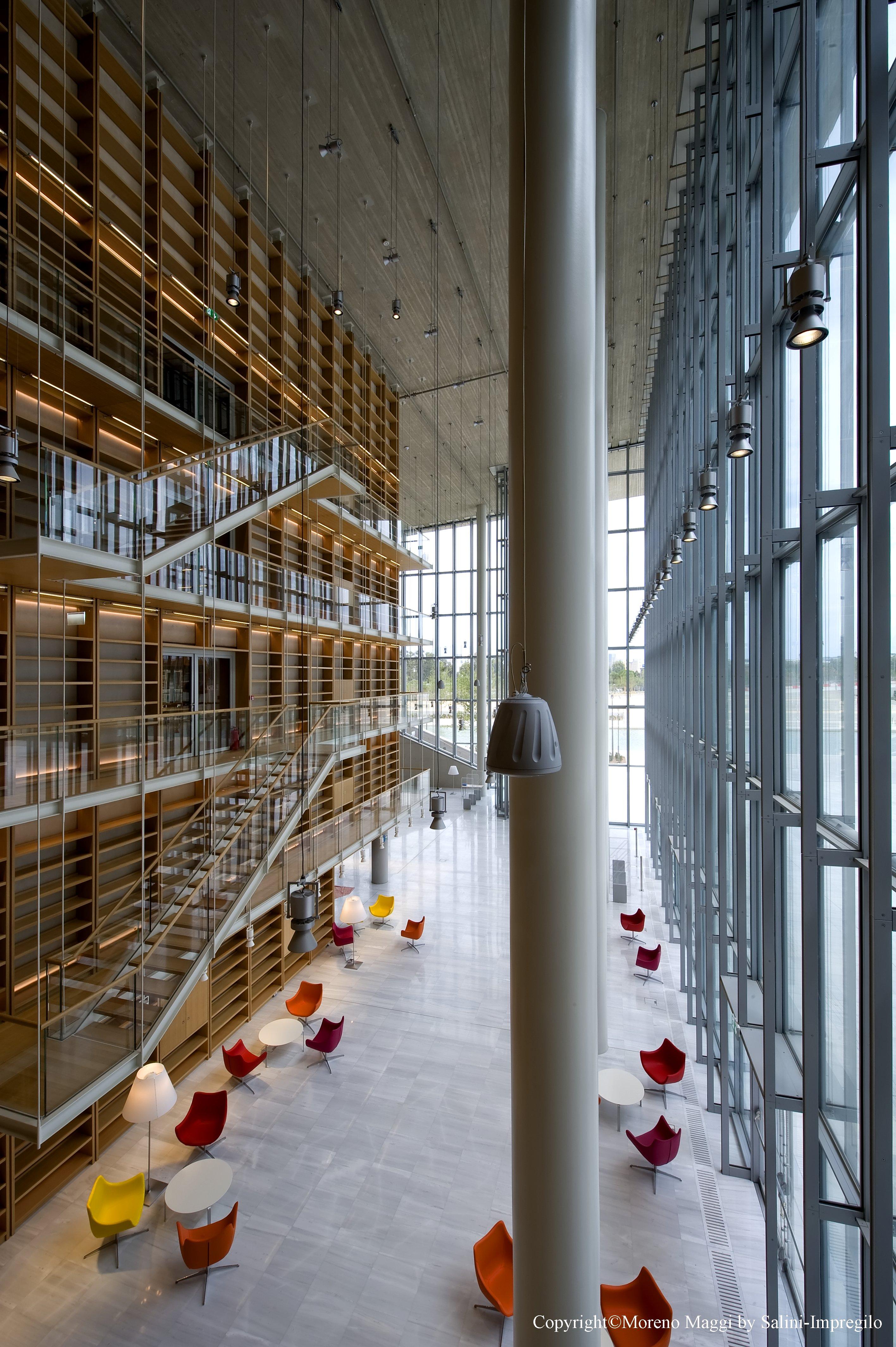
The first Webuild Innovation Centre
Webuild’s innovation centre promotes innovation for both its work sites and external stakeholders. It deploys disruptive technologies to design and develop complex solutions with the objective of improving the Group’s construction products and processes, also from a sustainability and safety viewpoint.
The innovation centre is also a shared physical and digital space where new expertise can be developed and honed as well as virtuous collaboration mechanisms both with the academic world and with research organisations and local counterparts. This has a positive effect on employment and enhances territorial resources.
From an Open Innovation perspective, partnerships with universities and research centres, as well as the involvement of suppliers, customers and strategic partners will facilitate the co-creation of high-impact innovative solutions for the domestic market, with a planned expansion to match the Group’s global footprint. Between 2024 and 2027, the innovation centre will engage in R&D projects with external stakeholders to develop and test the first prototypes and their possible future roll-out.
In 2024, the Group set up a special team made up of members with different skill-sets. It also started to work with universities and strategic partners.
In 2025, the initial results of the research into innovative construction materials and techniques were received. The team also started to develop solutions to digitalise internal processes and build technologies to support safety, sustainability and automation.
Innovative Materials
The Group invests significant resources in this area, including the adoption of “Construction 4.0” electrical systems capable of monitoring the electrical parameters of construction sites and improving their energy performance. Additionally, we focus on replacing energy-intensive processes with more eco-friendly alternatives.

Innovation and sustainability are inseparably linked to growth for us; they are our compass toward the future and represent our competitive edge on the international stage.
Safety, Quality, and Environment: The Sustainable Footprint of Webuild Sites
Webuild designs its construction sites sustainably, paying attention to the health and safety of its workers and communities, and to safeguarding the environment. Right from the design phase of our construction sites, we adopt a "Sustainable Construction Site" model thanks to new technologies and modern cutting-edge work models, to guarantee safety in the workplace and to protect the territories where we work, coordinating with the Competent Authorities.
In our construction sites, we develop integrated solutions to improve health and safety at work. We study Smart Safety pilot projects with sensor systems for human-machine interaction, human-suspended loads interaction, and the delimitation of areas with greater risks. We constantly work to optimize our work at height procedures, we invest in training our staff to make them more aware on Health & Safety matters, through scheduled and on-the-job training initiatives. We adopt solutions for real-time supervision of work activities carried out in our construction sites.
Webuild protects the territory that hosts its construction sites, establishing a close relationship with it. This takes the form of smart and innovative solutions for efficiency, circular economy, reduction of the environmental footprint, and biodiversity safeguarding activities. All the industrial processes needed to build our projects that see us involved globally are subjected to evaluation, efficiency and optimization, in terms of their environmental components, with particular attention to water, energy and material consumption.
Energy Efficiency
The Group invests significant resources in this area, including the adoption of “Construction 4.0” electrical systems capable of monitoring the electrical parameters of construction sites and improving their energy performance. Additionally, we focus on replacing energy-intensive processes with more eco-friendly alternatives.
Roboplant: factories of the future
Pre-cast Concrete Segment Factories 4.0
The first of its kind in Italy, Roboplants are automated, safe, and environmentally friendly factories to produce pre-cast concrete segments, the structures with which freshly excavated tunnel walls are lined in tunnels of major infrastructure works such as railways or metros.