Talent and people
More jobs and fewer unemployed in the first half of 2022, but Istat reports record vacancy figure
It's getting harder and harder for companies to find the right candidate - And big companies decide to go it alone
The latest Istat surveys on the labour market bring positive signs: there were 23.1 million people employed in the second quarter of 2022, an increase of 677,000 over the same period in 2021, and the unemployment rate fell to 8.1 percent. On the other hand, the data on vacancies are not positive, at 2.2 percent, which is the highest level since 2016, the beginning of the observation period. Vacancies are those jobs that are vacant or about to be vacant, for which the employer actively seeks a suitable candidate and is willing to make extra efforts to find one. The OECDhad also recently noted that the incidence of job vacancies in Italy had reached record levels, with a particularly sharp increase in accommodation and food services, where it reached 3 percent in early 2022.
There have also been alarms from the business world in recent months about the growing difficulties in finding personnel, despite the fact that the unemployment rate - especially youth unemployment - in various regions is still at unacceptable levels. And so it is precisely in the corporate world that efforts to find a solution, which often come through agreements with schools and universities or corporate initiatives for training, are multiplying.
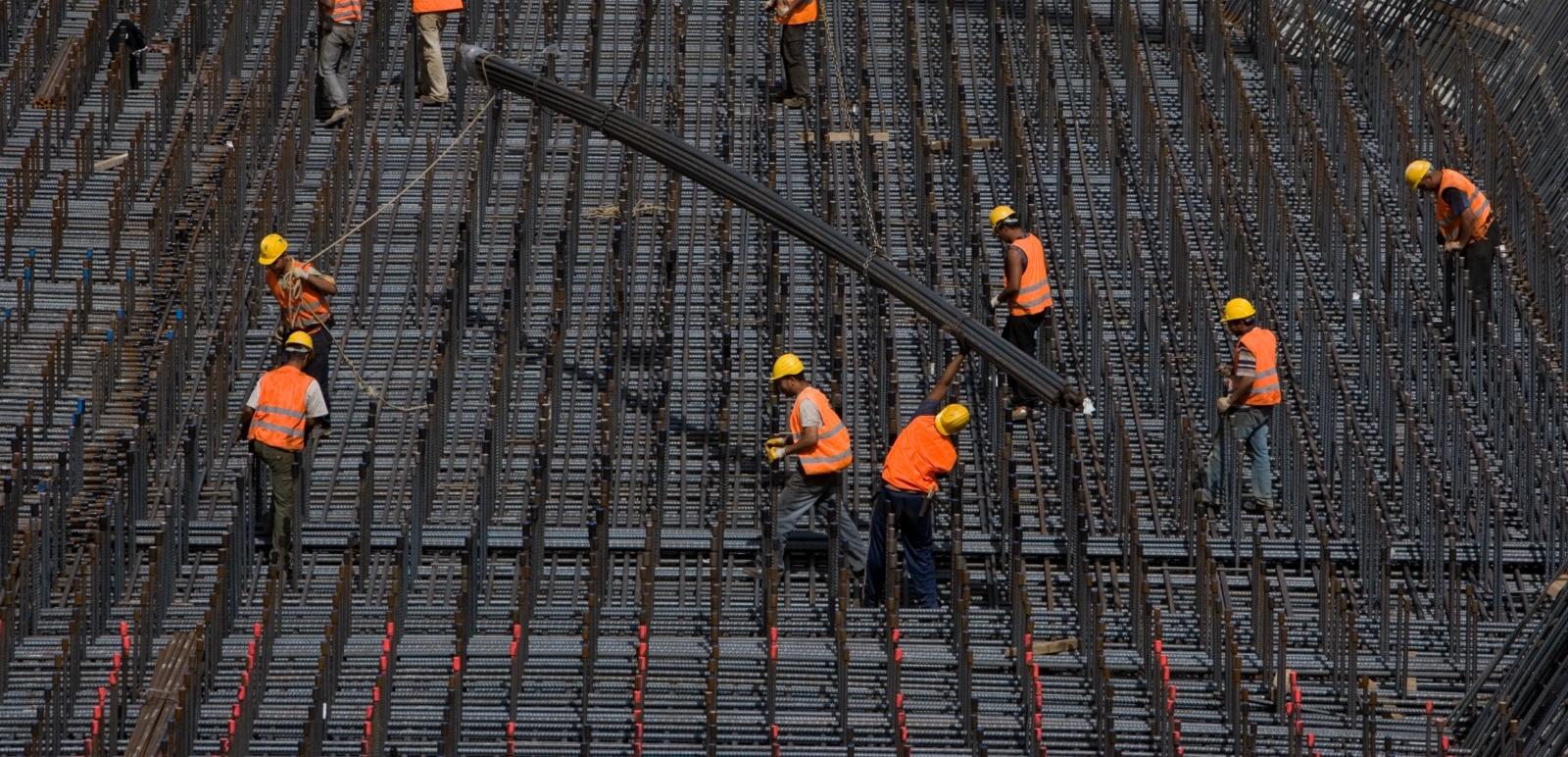
Webuild is an example of this, Italy's leading group in the construction of infrastructure and major works, which today employs 16,000 people, directly and indirectly, 9,000 of whom in the North and 7,000 in the Centre and South. Precious jobs, often-times in areas with a lack of employment, but in need professional figures to meet the needs of local companies.
From the School of Trades to collaboration with more than 15 universities
To address these needs, the group has launched a series of initiatives such as the , a course that combines theory and field experience i.e., on construction sites, to train the next generation of skilled workers. The School is open to all young people who have graduated from secondary school or completed VET or upper secondary school, as well as all those currently unemployed. The training course lasts 4-6 months and consists of three phases: preparatory modules on the use of equipment and machinery, with simulators; theoretical lectures on health and safety; and on-the-job training: practical training in the field.
In one of the infrastructure works that Webuild is building in Italy, the (the largest construction site currently active in our country), the training of the first workers in the school for traditional excavation has just been completed. The training, which began in May, lasted four months, and now the students are ready to perform the roles of excavators, pumpers, carpenters and lancers. Other workers in training also at the Terzo Valico will finish their training by the end of the year. Finally, two more school construction sites are in the process of being started by 2022: that of the while the second is at the Apice-Hirpinia railway section of the . These two pathway-schools, dedicated to traditional excavation and mechanized excavation, respectively, will allow about 120 people to be trained between the last half of 2022 and 2023.
Webuild is also engaged in programmes dedicated to young graduates, recent graduates and Italian universities to promote innovation and research in infrastructure. as part of the project. With the for example - the first edition ended in June 2022 - the winners were awarded 8 training internships to grow within the Webuild Group; and a three-year doctoral scholarship went to the Polytechnic University of Turin for a research project on the digital twin. For the academic year 2021-2022, Webuild also promoted the first edition of Challenge4Sud aimed at all students in bachelor's and master's engineering degree programmes at universities in Abruzzo, Basilicata, Campania, Molise, Puglia, Sardinia and Sicily, who competed in a real challenge to develop and propose the most innovative and sustainable ideas in the field of digital technologies to support infrastructure.