Our commitment
We transform the principles of sustainable development into concrete actions, integrating sustainable infrastructure and work sites into strategies, processes and projects
As a Group we commit to building infrastructure which improves people’s life quality, drive the territorial development. We operate respecting the heritage and natural resources, human dignity and freedom, while contributing to the economic and social wellbeing of the communities in which we operate, also by creating new jobs, training and development.
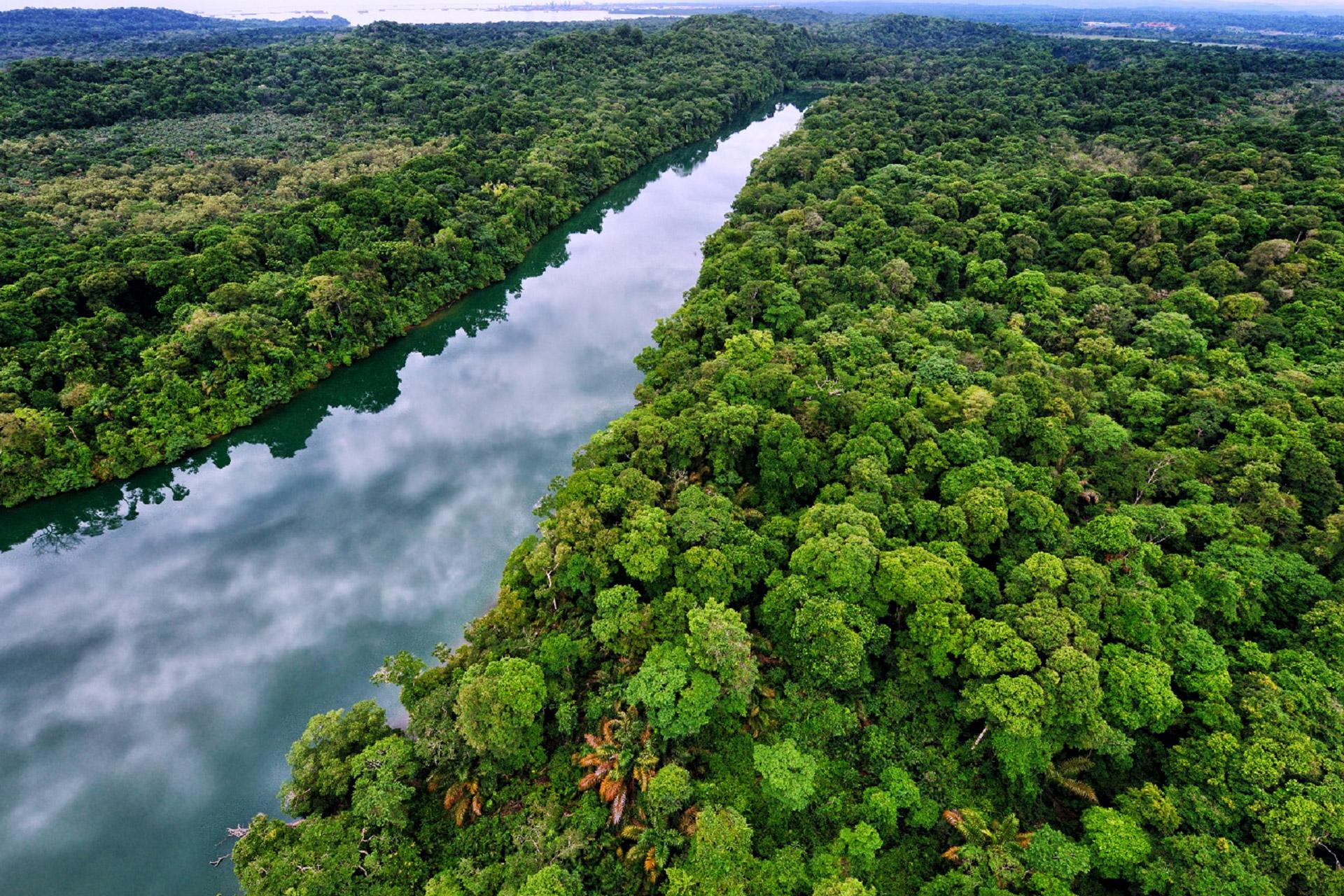
The Group’s commitment is reflected in develop and build construction projects that minimise their environmental impact, integrate innovative solutions that strengthen climate resilience, reach and maintain high international standards in terms of environmental certification.
Our daily activity is based on the highest ethical and integrity principles. As a signatory to Global Compact the United Nations, Webuild has long formalised its commitment to making a tangible contribution to supporting global efforts to achieve the Sustainable Development Goals (SDGs) set out in the United Nations 2030 Agenda.
Webuild is not just a general contractor, but a true solution provider for its customers. We offer innovative engineering solutions for sustainable, safe and efficient infrastructure, combining experience, technology and creativity to tackle the most complex challenges and support our customers with tailor-made approaches, anticipating tomorrow's needs
We believe in the future and work every day to create it. Through the construction of major works and our daily dedication, we contribute to improving the lives of people and local communities.
global challenges
Our contribute to global challenges
Sustainability: one of the business pillars
We are aware that our growth is tied to that of the world in which we operate. It follows that sustainability is an integral part of every decision we take from how we design and build our works to our internal processes.
Webuild’s sustainable development strategy, conceived to achieve real, measurable and continuously better solutions, hinges on two key pillars: sustainable infrastructure and sustainable work sites.
Thanks to this strategy, Webuild continues to obtain solid results, with steadily improving environmental and social performance indicators and increasingly ambitious objectives to face global challenges.
Results achieved and future objectives
With a core business focused on building infrastructure that contributes to advancing key ESG objectives and the transition to a low-carbon economy, the Group responds to challenges by investing in sustainability for the planet, people and communities, thanks, in part, to ongoing collaboration with partners and clients.
| OBJECTIVE | TRACK RECORDS | EXPECTED RESULTS | |
|---|---|---|---|
CLEAN WATER | To offer sustainable solutions in order to procure, treat and desalinate the water to be used as drinking water and collect, send and treat wastewater | 20 million people are served solely by the desalination plants built by our subsidiary Fisia Italimpianti | ≈ 15 million people are served by the water treatment plants being built with a water treatment capacity of 8.8 million m3 per day |
CLEAN HYDRO ENERGY | Building hydroelectric plants that ensure access to low-cost clean energy for millions of people | 23.4 million inhabitants served | ≈ 14,000 MW of new capacity installed by projects currently under construction |
SUSTAINABLE MOBILITY | Continue to be a leading player in sustainable urban and extra-urban mobility and land, sea and air transport infrastructure | 14,539 km of railways and subways, 82,577 km of roads, 1,022 km of bridges and viaducts, 3,462 km of tunnels | ≈ 4.1 million people will be served every day by the underground lines under construction |
GREEN BUILDINGS AND INNOVATION | To reduce the environmental footprint of the infrastructure throughout its life cycle, by using an Eco-design & Construction approach and investments in research, development and innovation | - 4.5 million people benefit from our construction projects | +€430 Mln of Investments in innovative projects with clean technology (2025 vs 2023) |
Conduct
Our Responsible Conduct
| OBJECTIVE | RESULTS ACHIEVED IN 2024 | EXPECTED RESULTS | |
|---|---|---|---|
SHARED VALUE | To contribute to the socio-economic development of the territories by using local labour and suppliers. To develop skills by constantly investing in theoretical and practical vocational training | 72% of our staff is hired directly by us locally from the Group's construction sites (direct and third-party personnel) | 93% of local supplies | ≈800,000 of training hours provided to our direct and third-party personnel | Creation of job opportunities for communities and businesses in the areas where the Group operates | Continuous development of workforce skills |
HEALTH AND SAFETY | To prevent accidents and guarantee safe, healthy working environments To foster a strong safety culture based on leadership | Accident rates among the best in the sector, internationally. Award-winning ValYou cultural change Safety Builders Program | Extension of the Safety Builders programme and the internal communication programme Valyou – Our safety way | Maintenance of accident rates among the sector’s best practices |
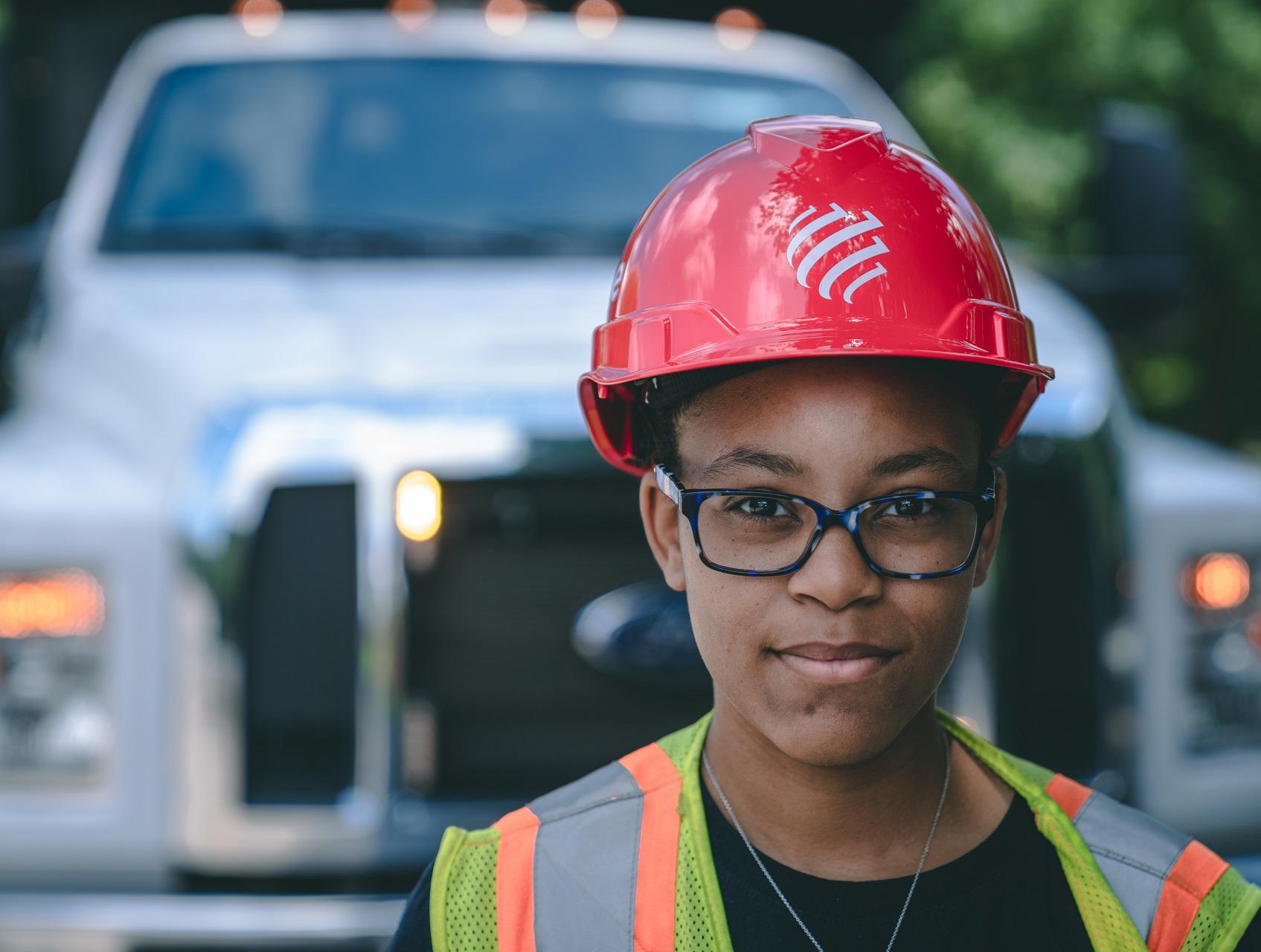
DIVERSITY AND INCLUSION | To promote the creation of inclusive working environments, where the capacity and potential of the individual is highly valued | Work force consisting of over 125 nationalities | 40% of BoD members are women | +6% of Women in Corporate personnel (2024 vs 2023) | 24% of the personnel <30 years | Extension of the pathway for promoting diversity in the construction sector, via policies of Recruitment, Employer Branding, Development and internal communication activities |
THE CLIMATE AND CIRCULAR ECONOMY | Reducing greenhouse gas emissions with a life cycle-oriented approach. Promoting the principles of the circular and green economy in production activities | Focus on re-use, recycling and reduction of waste: -67% reduction in GHG emissions (2023 vs 2017) | 68% materials sent for recovery | 51% recycled water low carbon steel used | 67% of materials purchased within 160 km of construction sites | Promotion of innovation to reduce greenhouse gas emissions and environmental impacts in general | Further use of practices to reduce energy and water consumption, and exploit resources |
People and Skills: the Engine of Progress
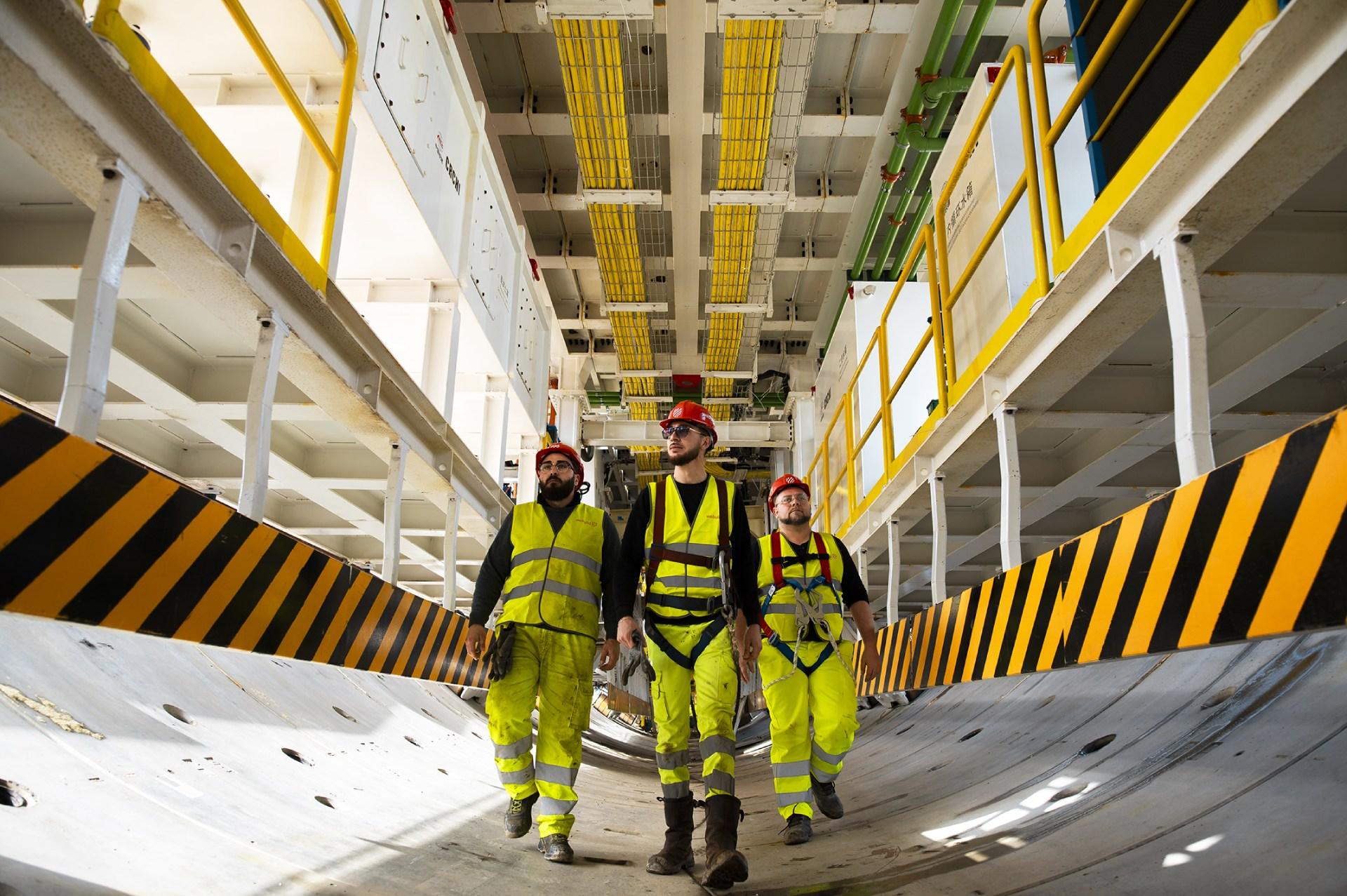
We build and deliver major infrastructure projects to clients and communities through the expertise and commitment of our people.
We manage complex challenges with a cohesive team that with their ingenuity reach every goal.
+ + +
people working on Webuild projects worldwide
+ + +
nationalities represented
+ + +
new hires in 2025
+ + +
Webuild’s workforce is under 35